Many parents in McLean begin searching for answers because something doesn’t feel quite right with their child’s sleep or breathing. Snoring, mouth breathing, restless nights, frequent congestion, or difficulty focusing during the day often raise concerns long before crooked teeth ever do.
What many families don’t realize is that sleep quality, breathing patterns, facial growth, and orthodontic development are closely connected. When these systems are not developing in balance, the effects can show up in subtle but meaningful ways during childhood and may continue into adulthood.
This is where airway orthodontics and interceptive orthodontics can play an important role. Rather than focusing only on straight teeth, airway-focused care looks at how a child is growing, breathing, and sleeping during the most critical developmental years.
What Is Airway Orthodontics?
Airway orthodontics is an approach to orthodontic care that considers how a child breathes and sleeps, not just how their teeth align.
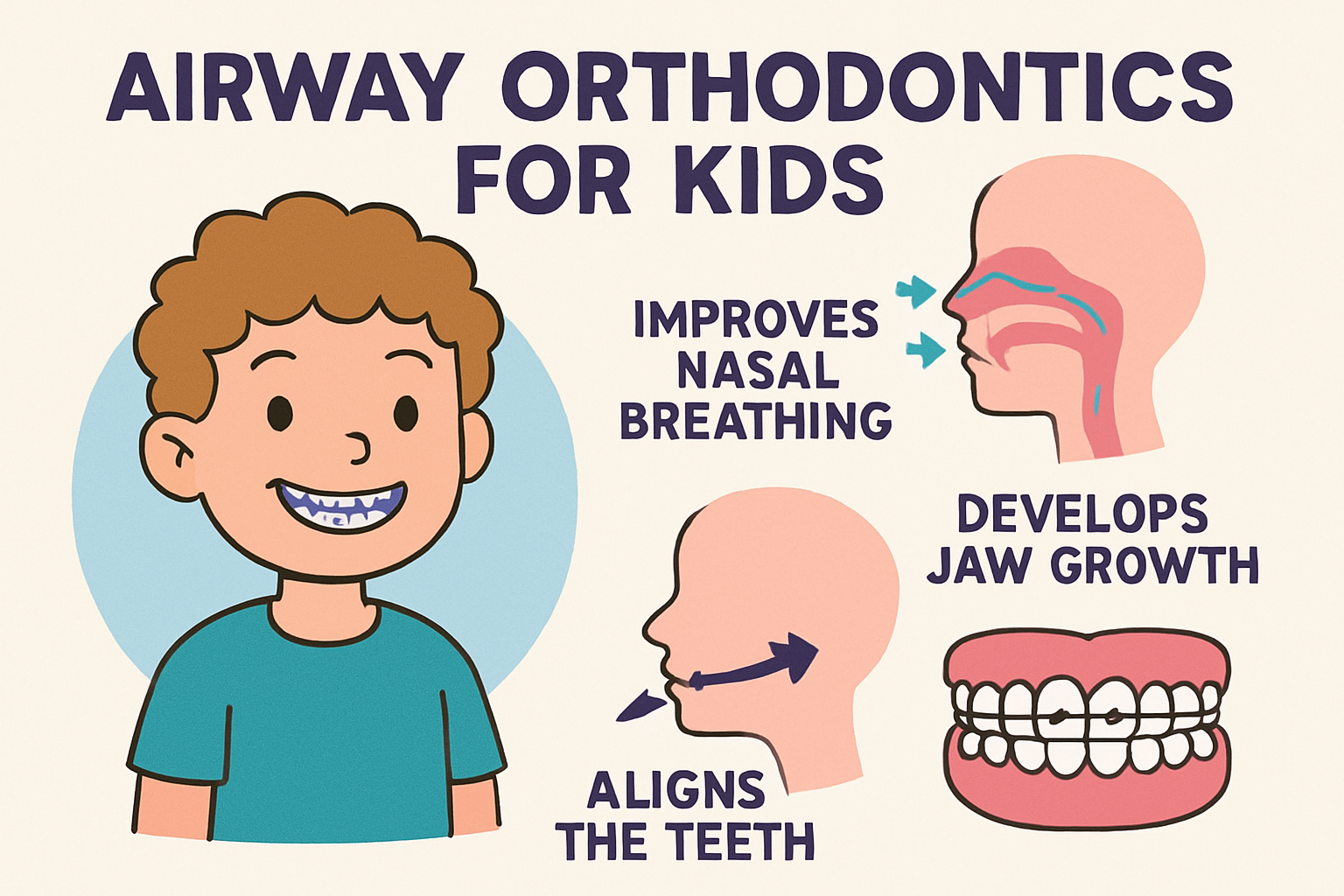
During childhood, the jaws, facial bones, and airway are still forming. If jaw growth is narrow or restricted, it can reduce space for the tongue and airway, making breathing less efficient, particularly during sleep. Over time, this can affect not only dental alignment, but also sleep quality and overall development.
Airway orthodontics focuses on supporting healthy jaw development, proper tongue posture, nasal breathing, and balanced facial growth. When these elements are supported early, children may experience improvements in comfort, sleep, and long-term oral health, with straighter teeth becoming a natural outcome of healthier development.
Signs a Child May Have an Airway or Sleep-Related Concern
Parents are often the first to notice subtle signs that something may be affecting their child’s breathing or sleep, even if they don’t immediately connect it to orthodontic development.
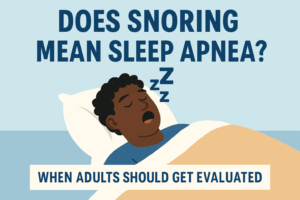
Some common signs include mouth breathing during the day or night, snoring or noisy breathing while sleeping, restless sleep or frequent waking, teeth grinding or clenching, dark circles under the eyes, chronic nasal congestion, difficulty focusing, hyperactivity, or behavioral challenges. A narrow smile or crowded teeth may also be visible early clues.
While these signs are common, they are not always normal. In many cases, they suggest that a child’s airway is working harder than it should.
Signs of Sleep Apnea in Children That Parents Often Miss
How Sleep-Disordered Breathing Affects Children
Sleep-disordered breathing exists on a spectrum and does not always look like adult sleep apnea. In children, it is often quieter, subtler, and easier to miss.
When breathing is disrupted during sleep, a child’s body may never reach deep, restorative rest. Over time, this can affect attention and learning, emotional regulation, energy levels, immune health, and overall growth. Many children with disrupted sleep do not appear tired in the traditional sense. Instead, fatigue may show up as irritability, difficulty focusing, or increased activity during the day.
Addressing airway concerns early can help improve how deeply and consistently a child sleeps, supporting healthier development overall.
The Role of Tonsils, Adenoids, and Mouth Breathing
Enlarged tonsils and adenoids are common contributors to breathing difficulties in children. When airflow through the nose is restricted, children often compensate by breathing through their mouth, especially at night.
Chronic mouth breathing can influence jaw and facial growth, tongue position and muscle function, dental arch width, and long-term airway development. Because these systems are interconnected, airway orthodontic evaluations consider them together rather than addressing each concern in isolation.
Learn more about Enlarged Tonsils and Adenoids and how they can affect a child’s sleep.
Why Mouth Breathing Can Affect a Child’s Facial Growth, Sleep, and Long-Term Health
What Is Interceptive Orthodontics?
Interceptive orthodontics typically takes place between the ages of five and ten, when the jaws and facial bones are still developing. Rather than waiting for crowding or bite problems to worsen, interceptive care focuses on guiding growth at the right time.
This early approach may help create space for erupting permanent teeth, support healthier breathing patterns, encourage balanced jaw development, reduce the likelihood of extractions later, and shorten or simplify future orthodontic treatment.
Not every child needs early orthodontic treatment. In many cases, an early evaluation simply allows for careful monitoring and informed decision-making as a child grows.
Airway Orthodontics Compared to Traditional Orthodontics
Traditional orthodontics typically focuses on aligning teeth once most permanent teeth are present. Airway orthodontics expands the focus to include how growth, breathing, and sleep influence dental development.
Traditional orthodontics prioritizes tooth position, while airway orthodontics prioritizes growth, airway space, and function. By supporting development early, airway-focused care helps promote long-term stability and comfort, with straight teeth becoming a result of healthier growth rather than the only objective.
Both approaches have value, but airway orthodontics is especially impactful during early developmental stages.
Why Waiting Can Limit Options Later
Jaw growth follows a natural biological timeline. Once growth slows, treatment options may become more complex and less adaptable.
Delaying evaluation can lead to increased crowding, narrower dental arches, greater reliance on extractions, and a higher risk of TMJ discomfort or sleep-disordered breathing in adulthood. Early evaluation does not commit families to treatment. Instead, it provides clarity during a time when growth can still be guided gently.
A Pattern Many Parents Recognize
Many parents who bring their child in for an airway evaluation experience an unexpected realization. As they learn about breathing, sleep, and jaw development, they begin to recognize similar patterns in their own health history.
Adult concerns such as TMJ discomfort, teeth grinding, chronic headaches, snoring, and sleep apnea often trace back to airway and jaw development during childhood. Supporting healthy growth early may help prevent these challenges from repeating in the next generation.
A Thoughtful, Whole-Health Approach for Families in McLean
Families in McLean often value preventive, education-driven care. Airway orthodontic evaluations are designed to provide insight, guidance, and reassurance without pressure.
Each evaluation considers breathing and sleep patterns, facial growth and jaw balance, long-term comfort and function, and individual timing and needs. The goal is to support healthy development in a way that feels thoughtful, calm, and personalized.
When Should a Child Be Evaluated?
Most children benefit from an airway-focused orthodontic evaluation between the ages of five and seven, especially if there are concerns related to breathing, sleep, or development.
Early evaluation creates awareness and options, even if no immediate treatment is recommended.
Schedule a Pediatric Airway Orthodontic Evaluation in McLean
If you’re a parent in McLean wondering whether your child’s breathing, sleep quality, or development could benefit from early orthodontic guidance, an evaluation can be an important first step.
Our focus is on education, prevention, and long-term wellness, helping children thrive now and into adulthood.
Schedule a pediatric airway orthodontic consultation today to learn more and receive personalized guidance.
Frequently Asked Questions
Is snoring normal in children?
Occasional snoring can happen, but frequent snoring may indicate airway restriction or disrupted sleep and should be evaluated.
Can mouth breathing affect facial development?
Yes. Chronic mouth breathing can influence jaw growth, facial balance, and dental arch development over time.
Does every child need early orthodontic treatment?
No. Many children only need monitoring. Early evaluation helps determine the right timing, if treatment is needed at all.