Many parents begin to worry when their child snores, breathes through their mouth, or seems restless during sleep. It’s common to wonder whether these behaviors are simply phases of childhood or signs that something deeper may be affecting sleep and development.
One often overlooked factor is the role of enlarged tonsils and adenoids. These tissues play an important role in immune health, but when they become enlarged, they can interfere with a child’s ability to breathe freely, especially at night.
For families in McLean, understanding how tonsils, adenoids, breathing, and jaw development are connected can be an important step toward improving a child’s sleep and overall well-being.
What Are Tonsils and Adenoids?
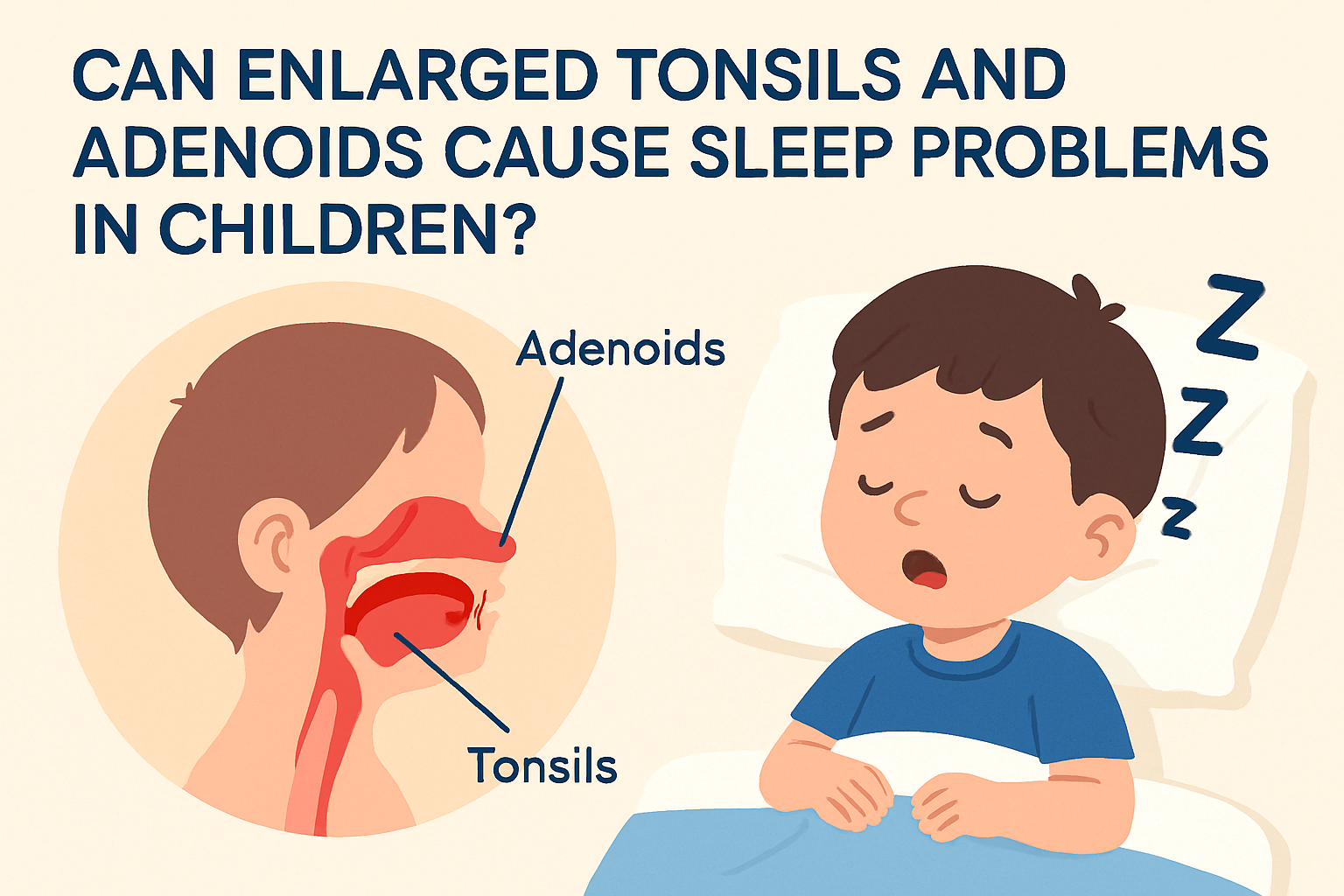
Tonsils and adenoids are part of the immune system and help the body fight infection, particularly in early childhood. Tonsils are located at the back of the throat, while adenoids sit higher behind the nose.
In some children, these tissues become enlarged due to frequent infections, inflammation, or genetics. When this happens, airflow through the nose and throat can become restricted, making breathing more difficult during sleep.
How Enlarged Tonsils and Adenoids Affect Sleep
When the airway is partially blocked, a child may struggle to breathe smoothly while sleeping. This can lead to disrupted sleep patterns, even if a child appears to sleep through the night.
Some children compensate by breathing through their mouth, which may reduce oxygen intake and prevent deep, restorative sleep. Over time, this can affect how rested a child feels and how well their body recovers overnight.
Sleep disruption related to breathing is often referred to as sleep-disordered breathing, a spectrum that ranges from mild airway resistance to pediatric sleep apnea.
Signs Tonsils or Adenoids May Be Affecting Your Child
Parents may notice a combination of symptoms rather than one obvious issue. Common signs include snoring on most nights, mouth breathing during sleep, restless tossing and turning, teeth grinding, bedwetting, frequent night waking, or sweating during sleep.
During the day, poor sleep may show up as difficulty concentrating, irritability, hyperactivity, behavioral challenges, or chronic fatigue that doesn’t always look like tiredness.
These signs are often misunderstood or attributed to behavior, when sleep quality may be the underlying factor.
The Connection Between Mouth Breathing and Development
When nasal breathing is restricted, children often adapt by breathing through their mouth. While this may seem harmless, chronic mouth breathing can influence how the jaws, facial bones, and dental arches develop over time.
Mouth breathing can contribute to narrower arches, crowding of teeth, altered tongue posture, and changes in facial balance. Because breathing and growth are closely connected during childhood, these patterns may influence both dental development and airway health.
This is why airway-focused evaluations look beyond the tonsils alone and consider how breathing habits interact with jaw growth.
Do Enlarged Tonsils Always Need to Be Removed?
Not necessarily. While tonsillectomy and adenoidectomy can be appropriate in some cases, surgery is not always the first or only option.
Each child’s situation is unique. Factors such as airway size, jaw development, breathing patterns, sleep quality, and overall growth all play a role in determining the best approach. In many cases, a collaborative evaluation helps families understand whether monitoring, orthodontic guidance, or medical referral is appropriate.
How Airway Orthodontic Evaluations Can Help
Airway orthodontic evaluations focus on how the jaws, teeth, and airway are developing together. When breathing issues are present, orthodontic guidance may help support healthier airflow by encouraging proper jaw growth and tongue posture during critical developmental years.
This approach does not replace medical care when it is needed, but it can be an important part of a comprehensive plan to support breathing, sleep, and long-term comfort.
For some children, early orthodontic guidance may reduce strain on the airway and help improve sleep quality as development progresses.
Why Early Evaluation Matters
Because jaw growth follows a natural timeline, early evaluation allows families to understand what is happening while growth can still be guided. Waiting until adolescence or adulthood may limit options and increase the likelihood of more complex treatment later.
Even when no immediate treatment is recommended, early insight provides clarity and peace of mind for parents.
When Parents Begin to Notice Patterns
Many parents who learn about airway and sleep issues in their children begin to recognize similar experiences from their own childhoods. Snoring, mouth breathing, orthodontic crowding, TMJ discomfort, and sleep challenges often have roots in early development.
Helping children early may not only improve their current sleep and comfort, but also support healthier outcomes long-term.
When to Consider an Evaluation
Parents may want to consider a sleep and airway evaluation if their child snores frequently, breathes through their mouth, sleeps restlessly, struggles with focus or behavior, or shows signs of dental crowding at a young age.
Evaluation does not mean committing to treatment. It simply means understanding how breathing, sleep, and development are working together.
Supporting Healthy Sleep for Children in McLean
For families in McLean seeking thoughtful, education-focused care, understanding the connection between tonsils, adenoids, breathing, and development can be empowering.
Addressing sleep-related concerns early supports not only better rest, but healthier growth, learning, and quality of life.
If you’re concerned about your child’s sleep or breathing, a pediatric airway-focused evaluation can provide helpful guidance and next steps.