When most people think about sleep apnea, they picture adults who snore loudly, wake up gasping for air, or rely on CPAP machines. What many parents don’t realize is that sleep apnea can affect children, and the signs often look very different from what we see in adults.
Because pediatric sleep apnea does not always present as obvious daytime sleepiness, it is frequently misunderstood or overlooked. Many parents in McLean begin searching for answers only after noticing ongoing sleep disturbances, behavioral concerns, or orthodontic issues that do not seem to have a clear explanation.
Understanding the early signs of sleep apnea in children is critical. Left untreated, disrupted breathing during sleep can impact learning, behavior, growth, and long-term airway development.
What Is Sleep Apnea in Children?
Sleep apnea is a condition in which breathing is repeatedly interrupted during sleep. In children, this usually occurs because the airway becomes partially or fully blocked while sleeping.
Pediatric sleep apnea is part of a broader category known as sleep-disordered breathing, which includes snoring, increased breathing effort, partial airway obstruction, and repeated sleep disruptions. Even mild interruptions can prevent a child from reaching deep, restorative stages of sleep.
Unlike adults, children with sleep apnea are not always overweight or visibly tired. In many cases, airway anatomy, jaw development, enlarged tonsils or adenoids, and breathing habits play a larger role.
Why Sleep Apnea in Children Is Often Overlooked
One of the biggest challenges with pediatric sleep apnea is that its symptoms can look like other common childhood issues.
Instead of appearing sleepy, children may seem:
- Hyperactive
- Easily distracted
- Emotionally reactive
- Irritable or moody
Because these behaviors can overlap with attention or behavioral conditions, sleep is not always considered as a root cause. As a result, many children go years without a proper sleep or airway evaluation.
This is why education and awareness are so important for parents.
Nighttime Signs of Sleep Apnea in Children
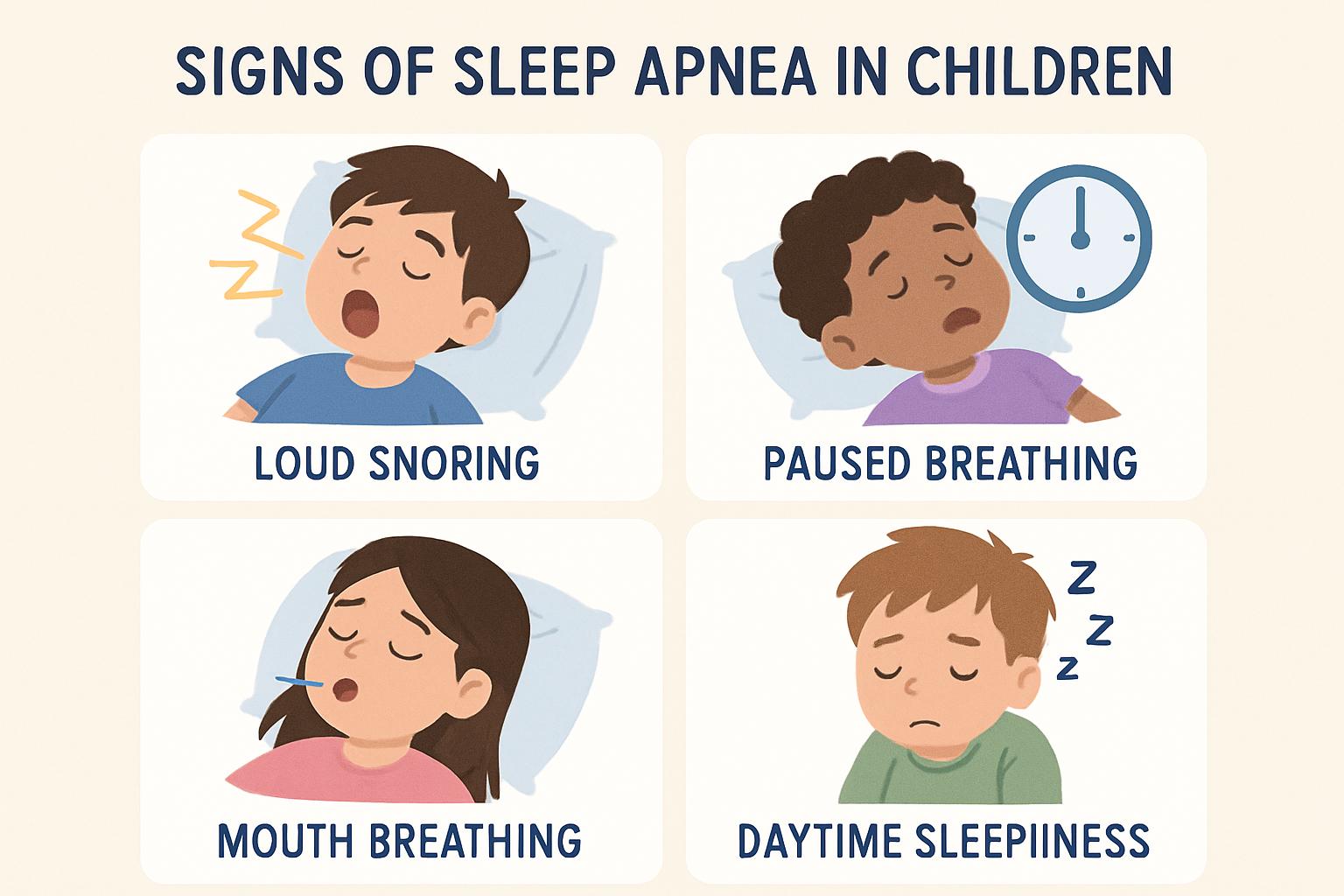
Snoring is one of the most common warning signs, but it is not the only one. Parents should look for patterns rather than isolated symptoms.
Nighttime signs may include snoring most nights, mouth breathing during sleep, pauses in breathing, gasping or choking sounds, restless tossing and turning, teeth grinding, excessive sweating during sleep, frequent waking, or unusual sleep positions such as sleeping with the head tilted back.
These signs suggest that a child may be working harder than normal to breathe while sleeping.
Daytime Symptoms Parents Often Miss
Because sleep disruption affects the brain and nervous system, daytime symptoms are often behavioral or cognitive rather than physical.
Common daytime signs include difficulty focusing, poor attention span, impulsivity, emotional sensitivity, irritability, mood swings, learning challenges, morning headaches, and chronic fatigue that may not appear as sleepiness.
Some children also experience bedwetting beyond expected developmental stages, which can be linked to disrupted sleep cycles.
Mouth Breathing and Its Role in Pediatric Sleep Apnea
Mouth breathing is both a symptom and a contributing factor in sleep-disordered breathing. When nasal airflow is restricted, children often adapt by breathing through their mouth, especially during sleep.
Over time, chronic mouth breathing can influence:
- Jaw and facial development
- Tongue posture
- Dental arch width
- Airway size
As facial growth patterns change, the airway may become even more restricted, creating a cycle that worsens breathing during sleep. This connection between breathing habits and development is why airway-focused evaluations are so important during childhood.
How Sleep Apnea Can Affect Learning and Behavior
Sleep plays a vital role in memory consolidation, emotional regulation, and attention. When sleep is disrupted night after night, the effects can accumulate.
Children with untreated sleep apnea may struggle in school, have difficulty following instructions, or show increased frustration and emotional reactivity. In some cases, symptoms closely resemble attention-related disorders, leading families to pursue behavioral or academic interventions without addressing sleep quality.
Improving sleep quality can sometimes lead to noticeable improvements in focus, behavior, and overall well-being.
The Connection Between Airway Development and Sleep Apnea
In many children, sleep apnea is closely linked to airway size and jaw development. Narrow dental arches, crowded teeth, and underdeveloped jaws can reduce the space available for airflow, especially when muscles relax during sleep.
Because the jaws and airway are still forming during childhood, early evaluation allows providers to assess whether developmental factors may be contributing to sleep disruption. Addressing these concerns early can help support healthier breathing patterns as a child grows.
This developmental approach is a key reason why orthodontic airway evaluations are often recommended when sleep-related symptoms are present.
When Snoring and Sleep Issues Should Be Taken Seriously
Occasional snoring during illness or congestion is common. However, parents should consider further evaluation if snoring occurs most nights, breathing appears labored during sleep, or sleep-related symptoms persist over time.
Sleep concerns are especially important to address when accompanied by behavioral changes, learning difficulties, mouth breathing, or early signs of dental crowding.
Early evaluation does not automatically mean treatment. It provides information, clarity, and guidance during a period when growth can still be influenced.
Why Early Identification Matters
Untreated pediatric sleep apnea has been associated with long-term sleep problems, orthodontic complications, TMJ discomfort, and increased risk of adult sleep apnea.
Because growth follows a biological timeline, addressing airway and sleep issues earlier allows families to explore conservative, development-focused options. Waiting until adolescence or adulthood may limit choices and increase the need for more complex interventions.
Supporting Healthy Sleep for Children in McLean
Families in McLean often seek thoughtful, prevention-focused care for their children. Understanding the signs of sleep apnea empowers parents to advocate for early evaluation and support healthier development.
If your child snores regularly, breathes through their mouth, sleeps restlessly, or struggles with focus and behavior during the day, a pediatric airway-focused evaluation can provide valuable insight.
Evaluating sleep, breathing, and development together allows families to make informed decisions and support healthier outcomes now and in the future.