

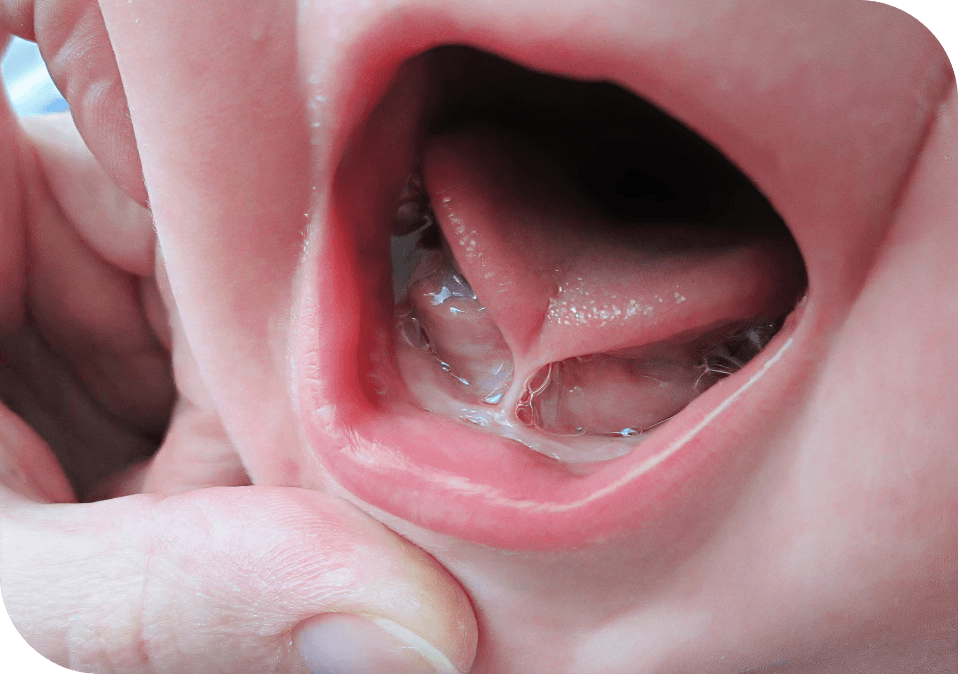


Close-up of a baby's open mouth, with a finger pulling down the lip to show the pink oral cavity and saliva in the throat area.

Understanding the Condition

What Is Tongue Tie?

Tongue tie, medically known as ankyloglossia, occurs when the lingual frenulum — the band of tissue connecting the tongue to the floor of the mouth — is too short or tight, limiting normal tongue movement.
When the tongue cannot move freely, it may affect how a person breathes, swallows, speaks, and rests their jaw.
Some tongue ties are diagnosed during infancy or childhood, but many mild or moderate restrictions go unnoticed for years. In these cases, patients may reach adulthood before realizing that a single restriction could be contributing to symptoms they have experienced for a long time.
Because the tongue plays an important role in airway support, jaw stability, and muscle balance, restricted movement can affect more than just the mouth.

Tongue Tie in Children and Adults

Tongue tie can affect patients at any stage of life.
In children, restricted tongue movement may influence speech development, oral posture, feeding patterns, and how the mouth and airway grow.
In adults, years of compensation can lead to muscle tension, jaw discomfort, breathing challenges, or sleep disturbances.
Evaluating tongue mobility early can help identify the underlying cause of these concerns and guide appropriate treatment.
At Fairlington Dental, we evaluate tongue function across all ages and provide individualized care recommendations based on each patient’s needs.
Woman sits with a pained expression, pressing her jaw with her hand, indicating tooth or jaw pain.

Signs That Tongue Mobility May Be Restricted

Tongue restriction can present differently depending on how the body has adapted over time. Common signs may include:
1. Chronic jaw tightness, TMJ discomfort, or clicking when opening the mouth
2. Teeth grinding or clenching, particularly during sleep
3. Persistent snoring or disrupted sleep
4. Habitual mouth breathing or difficulty breathing comfortably through the nose
5. Chronic neck, shoulder, or upper back tension
6. Forward head posture or difficulty maintaining proper alignment
7. Speech sounds that feel strained or difficult to pronounce
8. Difficulty swallowing comfortably
Because these symptoms may have multiple causes, a thorough clinical evaluation helps determine whether tongue restriction may be contributing. If you would like to learn more about recognizing these symptoms, you can read our guide on symptoms of tongue tie in adults.

How Tongue Tie
Can Affect Overall Health

The tongue is connected to many systems in the body. When its movement is restricted, the body often compensates in ways that may influence overall health.
Green gradient banner strip fading from darker to lighter green.

Breathing and Airway

Healthy tongue posture supports nasal breathing and airway stability. When the tongue cannot rest comfortably against the roof of the mouth, mouth breathing patterns may develop that contribute to airway irritation and disrupted sleep.

Jaw Function and TMJ Health

The tongue plays an important role in stabilizing the jaw during swallowing and rest. Restricted mobility can place additional strain on jaw muscles and joints, which may contribute to chronic tension or TMJ discomfort.

Posture and Neck Alignment

Tongue posture is closely connected to head and neck alignment. When the tongue cannot function normally, surrounding muscles often compensate, sometimes creating long standing tension in the neck and shoulders.

Swallowing and Digestion

The tongue helps guide swallowing and initiate the digestive process. Limited movement can alter swallowing mechanics and reduce efficiency during chewing.

Tongue Tie Treatment at Fairlington Dental
At Fairlington Dental, tongue tie care focuses on identifying the restriction and restoring proper tongue mobility through precise treatment.
Comprehensive Evaluation
Every tongue tie assessment begins with a detailed evaluation of tongue movement, jaw function, airway patterns, and patient symptoms.
This examination helps determine whether tongue restriction may be contributing to functional concerns.
Laser Frenectomy Procedure
When treatment is recommended, we perform a laser frenectomy, a procedure that gently releases the restrictive tissue under the tongue. Laser frenectomy offers several advantages compared to traditional techniques:
• precise tissue control
• minimal bleeding
• reduced discomfort
• faster healing
• no sutures in most cases
The procedure itself is typically quick and designed to minimize disruption to surrounding tissues.
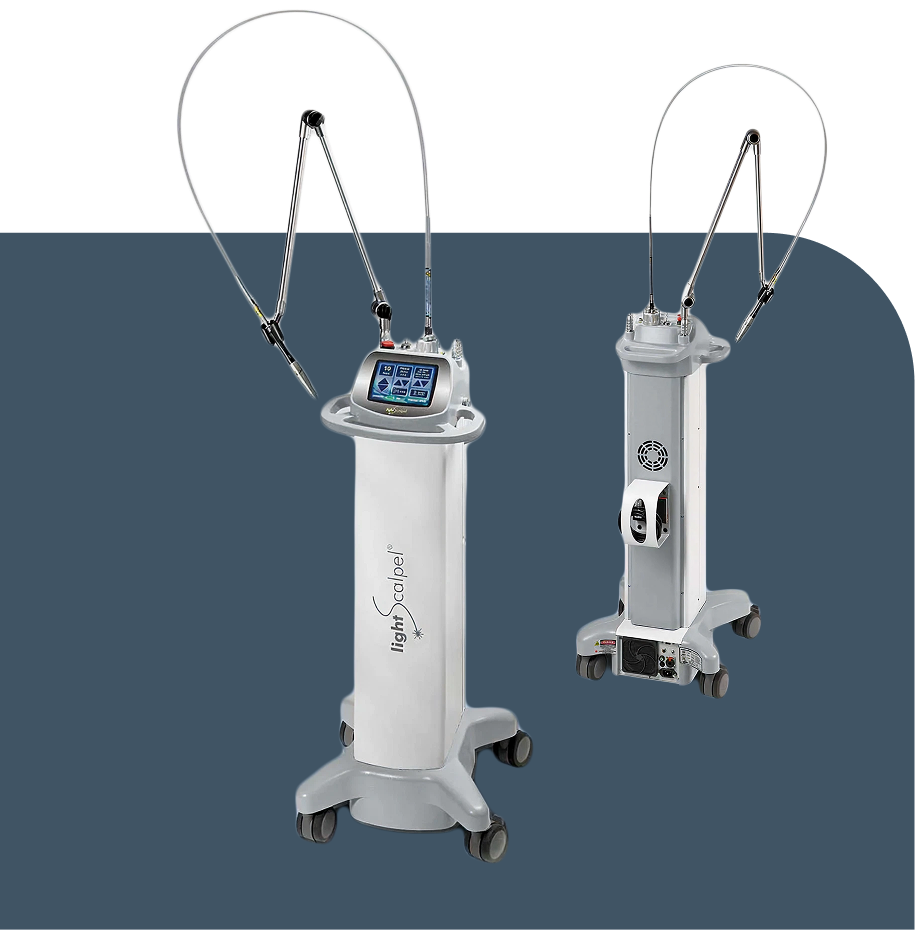
Two medical laser devices on wheeled stands with flexible fiber-optic arms, prepared for surgical or cosmetic laser procedures.

Advanced Laser Technology

Tongue Tie Treatment with LightScalpel Laser

At Fairlington Dental, we use LightScalpel CO₂ laser technology for precise tongue tie treatment. This advanced dental laser allows our team to release restrictive tissue with exceptional accuracy while preserving surrounding structures. LightScalpel lasers are specifically designed for delicate oral soft tissue procedures, making them an ideal option for treating tongue ties in both children and adults. Compared to traditional surgical methods, laser treatment offers a more comfortable and controlled experience for patients.

Benefits of LightScalpel Technology

The precision of the LightScalpel laser allows our team to perform tongue tie release with minimal trauma to surrounding tissue.

Benefits of Tongue Tie Release

Patients who undergo tongue tie treatment often notice improvements in comfort and daily function. Possible benefits may include:

Improved Sleep and Reduced Snoring

Improved airway support and reduced mouth breathing can contribute to better sleep quality.

Reduced Jaw Pain and Muscle Tension

Releasing tongue restriction may help reduce strain on jaw muscles and surrounding tissues.

Easier Nasal Breathing

Proper tongue posture helps support healthy nasal breathing patterns.

Clearer Speech

Greater tongue mobility can allow for easier articulation of certain speech sounds.

Improved Posture

As muscle patterns normalize, some patients notice reduced neck tension and improved head alignment.

More Comfortable Swallowing

Full tongue mobility helps restore natural swallowing mechanics.

Green leaf branch silhouette against a black background, fern-like fronds spreading outward, decorative illustration.

Why Patients Choose
Fairlington Dental

Complete Health Dentistry Philosophy

We approach oral health as part of a larger system that includes airway health, muscle balance, and overall wellness.

Advanced Laser Technology

Our LightScalpel laser allows for precise treatment with minimal discomfort and faster healing.

Patient Centered Care

Many patients have struggled with symptoms for years without clear answers. Our team takes time to evaluate each case carefully and provide thoughtful recommendations.

Serving Arlington and Northern Virginia

Fairlington Dental proudly serves patients throughout Arlington, Alexandria, Falls Church, and the greater Washington DC region.

Schedule a Tongue Tie Evaluation
If you suspect restricted tongue mobility may be affecting your comfort, breathing, or oral function, a professional evaluation can help determine the next steps.
Our team will assess tongue movement, review your symptoms, and discuss whether treatment may be beneficial.

Frequently Asked Questions

Is it too late to treat tongue tie as an adult?
No. Many patients receive tongue tie treatment in adulthood after discovering that restricted tongue movement may be contributing to long standing symptoms.

Accessibility Statement

We are continuously working to improve the accessibility of content on our website, but please do not hesitate to contact us if you have any questions or require assistance.

If you have trouble seeing web pages, the US Social Security Administration may have resources that will help you. You can also use the Accessibility features of your computer and/or software to:

– Use the keyboard to navigate screens
– Increase text size
– Magnify your screen
– Change background and text colors
– Make your mouse pointer more visible

If you are looking for mouse and keyboard alternatives, speech recognition software such as Dragon Naturally Speaking may help you navigate web pages and online services. This software allows the user to move focus around a web page or application screen through voice controls.

We are committed to ensuring we meet all of your needs. If you require assistance with any of the content on our website, please call our office at (703) 671-1001 and we will do everything in our power to assist you. Thank you!

Privacy Policy

What information do we collect?
When ordering or registering on our site, as appropriate, you may be asked to enter your name, address, e-mail address, or phone number. You may, however, visit our site anonymously.

What do we use your information for?
Any of the information we collect from you may be used in one of the following ways:

To improve customer service (Your information helps us to more effectively respond to your customer service requests and support needs.)
To process transactions (Your information, whether public or private, will not be sold, exchanged, transferred, or given to any other company for any reason whatsoever, without your consent, other than for the express purpose of delivering the purchased product or service requested.)
To administer a contest, promotion, survey or other site feature
How do we protect your information?
We implement a variety of security measures to maintain the safety of your personal information when you place an order or enter, submit, or access your personal information.

Do we use cookies?
We do not use cookies.

Do we disclose any information to outside parties?
We do not sell, trade, or otherwise transfer to outside parties your personally identifiable information. This does not include trusted third parties who assist us in operating our website, conducting our business, or servicing you, so long as those parties agree to keep this information confidential. We may also release your information when we believe release is appropriate to comply with the law, enforce our site policies, or protect our or others rights, property, or safety. However, non-personally identifiable visitor information may be provided to other parties for marketing, advertising, or other uses.

Third Party Links
Occasionally, at our discretion, we may include or offer third party products or services on our website. These third party sites have separate and independent privacy policies. We therefore have no responsibility or liability for the content and activities of these linked sites. Nonetheless, we seek to protect the integrity of our site and welcome any feedback about these sites.

Online Privacy Policy Only
This online privacy policy applies only to information collected through our website and not to information collected offline.

Your Consent
By using our site, you consent to our privacy policy.

Changes to Our Privacy Policy
If we decide to change our privacy policy, we will post those changes on this page.

Contacting Us
If there are any questions regarding this privacy policy you may contact us using the information below.

FairlingtonDental.com
Michael Rogers, DDS
Fairlington Dental
4850 31st Street South, Suite A Arlington, VA 22206
(703) 671-1001
Email Us